The DVArchive Collection on Kurator: License Global Lifestyle, Wildlife, and Archival Footage Dating Back to 1898
Published by Kurator | Media Licensing News
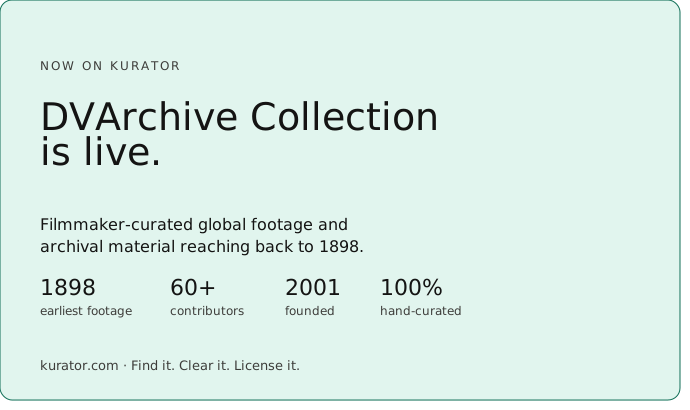
The DVArchive Collection is available on the Kurator marketplace, giving filmmakers, broadcasters, documentarians, and ad agencies access to a hand-curated library of stock footage spanning contemporary world travel, wildlife, lifestyle, and historical archival material dating back to 1898. Founded by award-winning filmmaker Rick Ray in 2001, DVArchive represents an intimate collective of more than 60 filmmakers and includes the RetroFootage archival library — together covering everything from the 19th-century launching of warships to Edison-era kinetoscope footage to modern coverage of COVID-19, BLM protests, wildfires, and global landmarks. Kurator is the licensing home for DVArchive, with AI-assisted search, transparent pricing, and rapid clearance.
Browse the DVArchive Collection on Kurator →
What the DVArchive Collection Is
DVArchive is a curated stock footage collection built around a simple principle: every clip is hand-selected by a filmmaker. Founded in 2001 by award-winning filmmaker, editor, and cinematographer Rick Ray, DVArchive grew out of Ray's earlier brick-and-mortar footage company "Wish You Were Here," founded in Burbank, California in 1989.
What sets DVArchive apart from large, algorithmic stock libraries:
- Filmmaker-curated. Every clip is chosen by Rick Ray himself, with a focus on quality over volume.
- Intimate contributor network. Approximately 60+ contributing filmmakers worldwide, each with their own areas of expertise — wildlife, world locations, lifestyle, time-lapse, NASA, and more.
- Both contemporary and archival. DVArchive covers modern global travel and lifestyle alongside the RetroFootage library, which sources from the U.S. National Archives, private historical collections, and educational films.
- Rare, restored historical footage. Many archival clips are transferred from 16mm and 35mm film with noise reduction, colorization, and grading — rescuing material that would otherwise be unwatchable.
Kurator is the licensing home for the DVArchive Collection, making this carefully curated library searchable, clearable, and licensable in a single workflow.
Who Is Rick Ray and DVArchive?
Rick Ray is an award-winning filmmaker, cinematographer, and editor who has produced documentary work on subjects ranging from The Dalai Lama (10 Questions for the Dalai Lama) to Southeast Asia (Raise the Bamboo Curtain, narrated by Martin Sheen). His travel and documentary work forms the backbone of the DVArchive collection, joined by dozens of other contributing shooters.
A few facts that explain the collection's distinct character:
- Founded in 2001 as one of the early downloadable stock footage libraries
- RetroFootage launched in 2014 to specialize in archival material, later merging with DVArchive
- DVArchive footage has appeared in feature films, television productions, commercials, music videos, and concert backdrops
- Clips date as far back as 1898 — including 19th-century footage from the Edison kinetoscope era
- The collection is recognized through the Digital Media Licensing Association (DMLA), the leading industry body for stock and editorial media licensing
When you license from the DVArchive Collection on Kurator, you're tapping into a filmmaker's eye applied across nearly 130 years of moving images.
What's in the DVArchive Collection
The DVArchive Collection on Kurator spans an unusually wide range — contemporary world travel sits alongside silent-era archival film. Here's what you'll find.
World Travel and Global Locations
Rick Ray's documentary career has taken him to nearly every corner of the globe, and the resulting footage forms one of DVArchive's strongest categories:
- Landmarks and iconic locations across Asia, Europe, Africa, the Americas, and the Pacific
- Cultural footage capturing daily life, ceremonies, markets, and traditions
- Religious and spiritual sites — temples, monasteries, pilgrimages
- Coverage of Vietnam, Cambodia, Burma, Tibet, India, and other destinations central to Ray's documentary work
Wildlife and Nature
- Wildlife footage from dozens of contributing filmmakers worldwide
- Landscapes ranging from arctic to desert to rainforest
- Time-lapse sequences of natural phenomena
- Nature material suitable for documentaries, educational content, and broadcast
Lifestyle and People
- Model-released lifestyle imagery suitable for commercial use
- People, families, work, and recreation across cultures
- Contemporary coverage of urban and rural life worldwide
Sports and High-Concept
- Sports footage across multiple disciplines
- High-concept and creative cinematography for stylized projects
- Time-lapse and specialty cinematography
NASA and Science
- NASA imagery and space-related material
- Scientific and educational footage
RetroFootage: The Archival Library
DVArchive's RetroFootage component is what makes the collection genuinely distinctive. This is hand-curated archival material drawn from the U.S. National Archives, private historical collections, and vintage educational films — much of it improved through professional film transfer and restoration.
What you can find in the archival side of the collection:
- 19th-century footage including Edison-era kinetoscope material
- The 1898 launching of the Imperial Japanese Navy cruiser Chitose at the Union Iron Works shipyard in San Francisco — one of the oldest clips in the collection
- 20th-century historical footage covering wars, politics, and major world events
- Vintage educational and industrial films from across the century
- Silent-era footage including rare clips of historical institutions and events
- Archival material restored from 16mm and 35mm film with modern grading and noise reduction
Modern Editorial and News-Adjacent Coverage
DVArchive has continued to add contemporary editorial-style footage, including exclusive coverage of:
- COVID-19 pandemic scenes from around the world
- Voter registration and U.S. election issues
- Immigration at the U.S. southern border and elsewhere
- Black Lives Matter (BLM) protests
- Wildfires and natural disasters
This mix means DVArchive can supply both the historical context and the modern bookend for a single documentary or news production.
Why License DVArchive Footage Through Kurator
Kurator is the licensing home for the DVArchive Collection. Here's why that matters for buyers.
1. A Curated Library, Not an Algorithmic One
Most large stock platforms throw millions of clips at you and expect you to filter. DVArchive is the opposite — every clip has been hand-selected by an award-winning filmmaker. That means less wading through generic content and more usable footage per search.
2. Both Contemporary and Archival in One Place
Few collections combine modern world travel, wildlife, and lifestyle footage with deep archival material going back to 1898. For documentary producers who need to bridge eras within a single project, the DVArchive Collection eliminates the need to source from two or three separate libraries.
3. AI-Assisted Search Across the Full Library
Kurator uses AI transcripts and visual tagging to make DVArchive's footage searchable down to specific keywords, locations, subjects, and time periods. Search "1940s asylum" or "Tibetan monastery" or "California wildfire" and surface relevant clips immediately.
4. Clip-Level Previews and Per-Clip Pricing
Watermarked previews let you confirm footage is right before licensing. Per-clip pricing is structured for typical broadcast and digital usage — for example, per-clip rates cover 20 seconds of final usage, with custom pricing available for longer cuts, alternate formats, or unusual rights requests.
5. Cleared Archival Material
DVArchive's archival clips include extensive public domain and rights-cleared material, which is unusually valuable for historical documentary work. Clearance status is visible on each asset in Kurator.
6. One Marketplace, Multiple Premier Collections
The DVArchive Collection sits alongside the TEGNA Collection (70+ U.S. local news stations), the AFP Collection(global wire news), the Framepool Collection (premium nature and stock), and the Nimia Collection (Kurator's contributor archive). A documentary that needs DVArchive's restored 1920s footage plus TEGNA's local news context plus AFP's international wire coverage can source all three on a single platform with a single contract.
Who Should License DVArchive Footage
Documentary Filmmakers
DVArchive's combination of restored archival material and contemporary global coverage makes it a fit for documentaries spanning history, culture, environment, and current events. The RetroFootage side is especially valuable for historical docs that need rare, period-specific material.
Educational and Streaming Content
History courses, science programs, geography series, and cultural education projects can license DVArchive's archival and contemporary material under appropriate license tiers. The collection includes substantial NASA, scientific, and educational footage.
Advertising and Branded Content
Brand campaigns leaning on global travel, cultural authenticity, nature, lifestyle, or vintage Americana can license commercial-cleared assets. Model-released lifestyle imagery is available for advertising use.
Television and Streaming Productions
Series productions — particularly those with episodic global coverage or historical content — benefit from DVArchive's filmmaker-curated quality and breadth.
Music Videos and Concert Backdrops
DVArchive footage has appeared in concert backdrops, music videos, and live performance visuals, where its high-concept and time-lapse material is especially well-suited.
News and Editorial Producers
DVArchive's modern editorial coverage — COVID, BLM, immigration, wildfires, elections — provides news producers with verified contemporary footage to complement archival historical context.
How to License DVArchive Footage on Kurator
The process is built for production workflows:
- Search. Visit the DVArchive Collection on Kurator and search by keyword, location, time period, subject, or contributor.
- Preview. Review watermarked previews, descriptions, keywords, and clearance status for each asset.
- Request a license. Add clips to a license request and specify your intended use. Per-clip rates apply for 20 seconds of final usage; longer cuts and special formats are quoted custom.
- Get a quote. Receive transparent, use-based pricing for editorial, documentary, or commercial use.
- Clear and pay. Sign in-platform, pay through Kurator, and receive secure delivery of broadcast-quality files.
For complex projects, exclusivity needs, or hard-to-find archival material, you can contact Kurator's licensing teamdirectly. Kurator's footage research service can also search the DVArchive library on your behalf when a specific clip isn't surfacing in marketplace search.
About Kurator
Kurator is a media licensing and rights-management platform built for the editorial and creative media industry. Founded in 2011 under the brand Nimia, the company evolved into Kurator to offer a modern, cloud-based system for buying, selling, and tracking digital licenses for video and photography.
Kurator is headquartered in Bozeman, Montana, with offices in Seattle, New York, and London. The platform combines AI-assisted asset management, white-label storefronts for content owners, and a curated marketplace for licensees — all backed by a team of human licensing and clearance experts with decades of newsroom and rights-clearance experience.
Kurator's marketplace currently includes the DVArchive Collection, the TEGNA Collection, the AFP Collection, the Framepool Collection, and the Nimia Collection, with millions of stock and editorial footage assets available across all collections combined.
Frequently Asked Questions
Where can I license DVArchive footage?
You can license footage from the DVArchive Collection directly through the Kurator marketplace at kurator.com. Kurator is the licensing home for DVArchive.
How far back does the DVArchive collection go?
The DVArchive Collection includes footage dating back to 1898, including Edison-era kinetoscope material and other 19th-century moving image content. Through its RetroFootage archival library, the collection covers the full sweep of 20th and 21st century history.
Who curates the DVArchive collection?
DVArchive was founded in 2001 by award-winning filmmaker, editor, and cinematographer Rick Ray, who personally hand-selects clips for the collection. Ray's documentary credits include 10 Questions for the Dalai Lama and Raise the Bamboo Curtain (narrated by Martin Sheen). The collection includes work from approximately 60+ contributing filmmakers worldwide.
What kinds of footage are in the DVArchive collection?
The DVArchive Collection includes contemporary world travel, wildlife, landscape, lifestyle, sports, time-lapse, NASA, and high-concept footage, alongside the RetroFootage archival library — historical material drawn from the U.S. National Archives, private collections, and vintage educational films, often restored from 16mm and 35mm sources.
Is DVArchive footage available for commercial use?
Yes. DVArchive material on Kurator is available under editorial, rights-managed, and commercial licenses depending on the asset and intended use. The collection includes model-released lifestyle imagery specifically suitable for advertising and branded content.
How is DVArchive footage priced?
Pricing is per-clip and use-based. Standard per-clip rates apply for 20 seconds of final usage, with custom pricing available for longer durations, alternate file formats, or special rights requests. You can request a transparent quote directly through the Kurator marketplace.
Does DVArchive include public domain footage?
Yes. The RetroFootage archival side of DVArchive includes substantial public domain and rights-cleared historical material, much of it restored from original film sources. Clearance status is visible on each asset in the Kurator marketplace.
What other collections are available on Kurator?
Beyond DVArchive, Kurator represents the TEGNA Collection (70+ U.S. local news stations), the AFP Collection(global wire news), the Framepool Collection (premium stock and nature footage), and the Nimia Collection(Kurator's contributor archive). All collections are searchable through a single marketplace.
How do I get started?
You can create a free Kurator account to browse the DVArchive Collection, save assets, request quotes, and license footage. For active production projects, contact Kurator's licensing team directly for hands-on support.
Start Searching the DVArchive Collection
The DVArchive Collection is live on Kurator now. Whether you're producing a historical documentary that needs rare 1898 footage, a travel series that demands authentic global coverage, a brand campaign rooted in lifestyle and culture, or a news production bridging archival history with contemporary events, DVArchive's filmmaker-curated library covers an unusual breadth from a single trusted source.
Search the DVArchive Collection on Kurator →
For custom licensing, footage research, or production support, contact Kurator's licensing team.
Kurator is the licensing home for DVArchive, TEGNA, AFP, Framepool, Nimia, and other premier media collections. Find it. Clear it. License it.